

This 1979 postcard depicts a view of Podvoyskogo Street in the resort village of Gurzuf, located on the Southern Coast of Crimea. This period is characterized by the active development of the resort infrastructure in Soviet Ukraine.
What is shown on the postcard
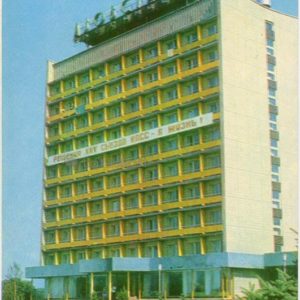
The image presents a panoramic view of a street leading uphill. Along the road, on the right, multi-story light-colored buildings with balconies are visible, typical of Soviet-era architecture, likely belonging to sanatorium complexes or residential buildings. The street is densely lined with evergreen and deciduous trees, as well as flowering shrubs, possibly oleanders. In the background, the mountain ranges of the Crimean Yayla rise majestically, emphasizing the picturesque landscape.
Historical note
Gurzuf has a rich history as a seaside resort, gaining prominence as early as the 19th century. During the Soviet period, it became a key center for organized recreation and health tourism, attracting visitors from across the USSR. The construction of numerous sanatoriums, boarding houses, and residential blocks in a functionalist style was characteristic of the era. Streets were often named after prominent revolutionary figures or heroes, such as Nikolay Podvoysky, a notable Bolshevik, reflecting the ideological direction of urban planning.
Present day
Today, Gurzuf continues to function as a resort, preserving its natural beauty and architectural heritage. Many Soviet-era buildings, including those along Podvoyskogo Street, remain part of the urban landscape, though some may have been modernized or redeveloped. The lush vegetation and views of the Crimean mountains continue to be a defining feature of the village. Street names in Ukraine, following independence and decommunization processes, may have changed, but the characteristic appearance of the resort village persists.
Questions and answers
- What is Gurzuf known for? Gurzuf is known as a resort town, especially popular in Soviet times for organized tourism and recreation.
- What architecture was typical for Gurzuf in the 1970s? In the 1970s, Gurzuf was characterized by functionalist architecture, typical of Soviet sanatoriums, boarding houses, and residential complexes of that period.
- Why were streets named after revolutionary figures in Soviet times? Streets were often named after revolutionary figures or Soviet heroes, such as Nikolay Podvoysky, as part of the ideological policy of that time.
See also
The «Old Postcards» archive includes other views of Gurzuf from 1979.

Reviews
There are no reviews yet.