
Daghestan
The 1981 set “Across Dagestan” has an unusual layout: nearly every card combines several scenes, and the caption lists them one after another. The result is less a catalogue of monuments than a mosaic of mountain life — villages, craftsmen, shepherds, dances and family scenes.
One card is given to Kubachi, showing a master craftsman and a home museum. The village has been known since the early Middle Ages for chain mail and weapons and remains one of the largest traditional centres of art metalwork, stone and wood carving in the Caucasus. Another card covers the Gamzat Tsadasa Museum, with the scenes “Old Shepherd”, “In the Cradle” and “Writing Lesson”. The Avar poet, father of Rasul Gamzatov, was born in the village of Tsada, where the museum opened in 1967.
Mountain scenery fills a card with views of Gunib village, the aul (mountain village) of Chokh and a gorge. In the village of Akhty there is a wedding dance and a talk with grandchildren; elsewhere, shepherds and a scene at a spring. Makhachkala appears through the lezginka dance, students and a city panorama, and a village monument honours soldiers who fell in the Second World War.
What sets these Soviet postcards of Dagestan apart is the everyday detail of 1981 placed beside the landscape: a cradle, a hearth, a song by the spring.
More sights
Views of Crimea · Petrodvorets · Pushkin Reserve · Mamayev Kurgan postcards
Showing all 8 results
-
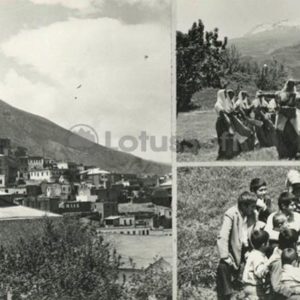
Akhty village. A wedding dance. Talk with grandchildren, 1981
-
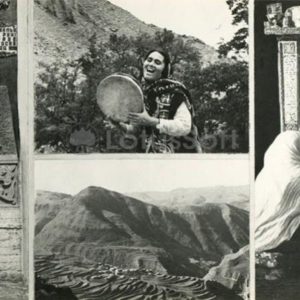
At the spring. Song. View of the village Shira. Hearth, 1981
-
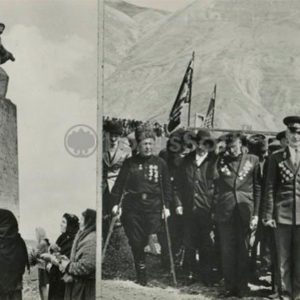
Huizah village. Monument to the fallen in the Great Patriotic War, in 1981
-
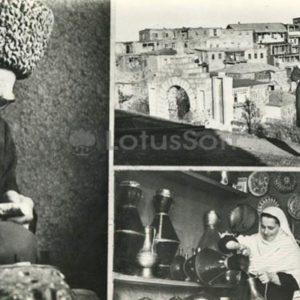
In the village Kubachi. Master. The home museum, 1981
-
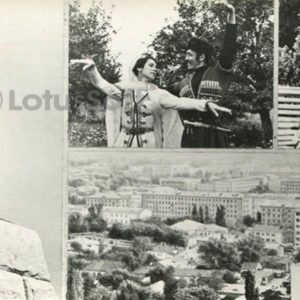
Makhachkala. Monument to Michael Dohodaevu. Lezginka. Students. Panorama of the city in 1981
-
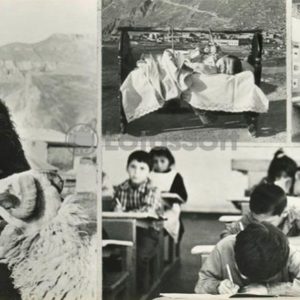
Museum Gamzat Tsadasa. Old shepherd. In the cradle. Letters Lesson, 1981
-
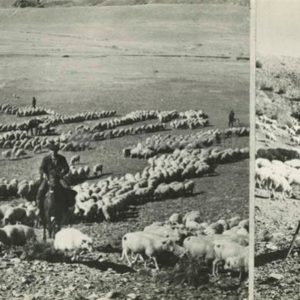
Shepherds, 1981
-
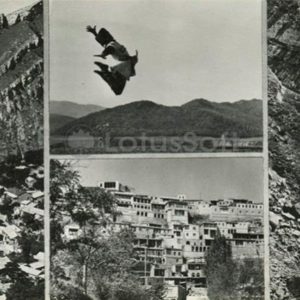
View of the village Gunib. Aul Chokh. Mountain gorge, 1981
